Tag: Sapuni Hettiarachchi

The Psychology of Space
We are physically and emotionally affected by our environment. Human experience of architecture comes from the interactions of light, shadow, colour, texture and form. It is a challenge to speak of one element without the other as none of these elements act in isolation. They combine with each other, forming infinite variations of architectural spaces.

Climatic Resilience Through Architecture
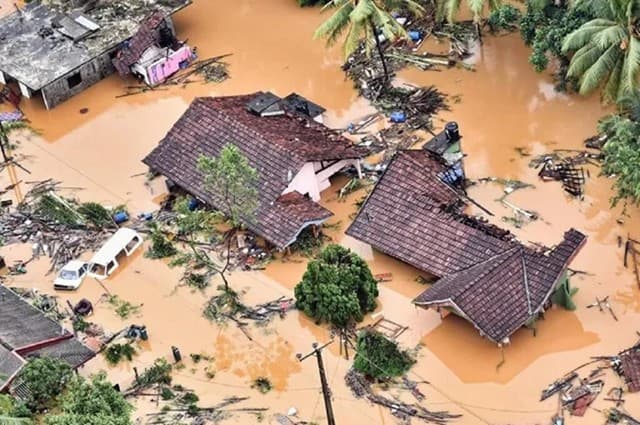
Resilience is the capacity to recover from a challenge, an inherent quality of endurance. It is a broad term that applies to people, buildings and landscapes. With regard to architecture, resilience is the ability of a building to resist or prevent damage or to recover from damage. This is critical for a building in a precarious context.
Sustainable Architecture
Reduce, reuse and recycle, the original 3Rs in sustainability are used to define waste management. Today, it has expanded to include terms such as refuse, repair, repurpose, recover, rethink and replace. All these terms have a very broad goal in mind; reducing the waste generated and contributing to environmental conservation.

Minimalism and Maximalism in Architecture
Minimalism and maximalism are two sides of a conversation unfolding over time. With each age, a different perspective is brought to the discussion. In a purely conceptual view, minimalism will reduce an object or content to its pure or essential state while maximalism will magnify the content until clarity of original form is overwhelmed by its complexity. Hence, in minimalism, an object is taken to its extreme simplicity and in maximalism, it will be taken in the opposite direction, to extreme complexity.

The Impact of Community – Centric Design
People and places are always intertwined; the human component of architecture is what breathes life into it, bringing character and purpose to the structure. In community-centric design, there is deep exploration into what makes a certain community unique; their dreams, aspirations and needs are a crucial building block to design. This is what highlights the contrast between community-centric and individual-centric design; the former revolves around the needs of the community while the latter revolves around the needs of an entity.
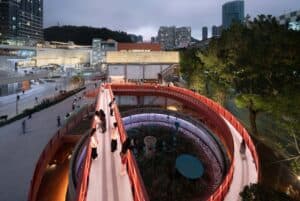
Adaptive Reuse for Sustainable Development
Once a building outlives its original purpose, instead of demolishing it, it can be rethought in a different way to serve a new purpose. Adaptive reuse refers to rejuvenating existing buildings fallen into disuse and disrepair by repurposing them to suit new uses. The historical and cultural fabric of the area is thus preserved leading to a more sustainable approach in construction. An adaptive reuse project will include both functional and physical changes to the building. For example, a warehouse or factory building can be converted to an office building, restaurant or apartment so that valuable urban space is efficiently utilised
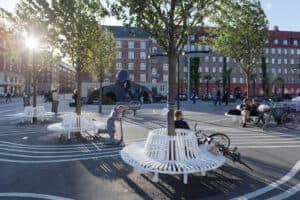
The Freedom of Multifunctional Spaces
Traditionally, space has been defined by one function leading to a multitude of individual spaces and buildings. For example, in a house, each space is highly defined creating a number of separate spaces such as kitchen, living room, dining room, bedrooms etc. This separation of function is seen in office spaces with independent working and meeting rooms as well as public spaces with dining, entertainment, work etc. being confined to different buildings. Continuing this tradition has become very challenging due to limited land, materials and labour leading to the popularity of multifunctional spaces, where several functions can be accommodated within one compact space.

Modular Architecture in House Design
Modular design is the combination of multiple smaller components such as modules creating a single system. This is not exclusive to architecture alone; you can see it in product design, automobile design etc. Generally, the components are created off site which allows the design to adhere to certain specifications and regulations. This is possible because you can create these parts in a factory setting and control the required parameters. This process allows you to control quality and cost, prioritising efficiency throughout all stages.
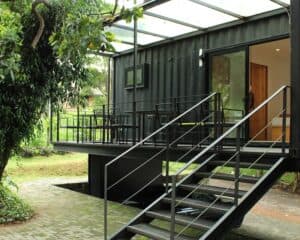
Module 47 Residence
The intent of the project was to explore the potential of compact living; seeking freedom from preconceived notions of a house. The focal point of the land is an old “kaju” tree growing in the centre; the topography of the land was mainly left untouched with the existing vegetation.